Back to News
SMS vs Email for Sales Outreach: The Data Behind Why You Need Both
Rocket Agents Team
April 5, 2026
#sms-marketing#email-outreach#omnichannel#sales-automation#open-rates
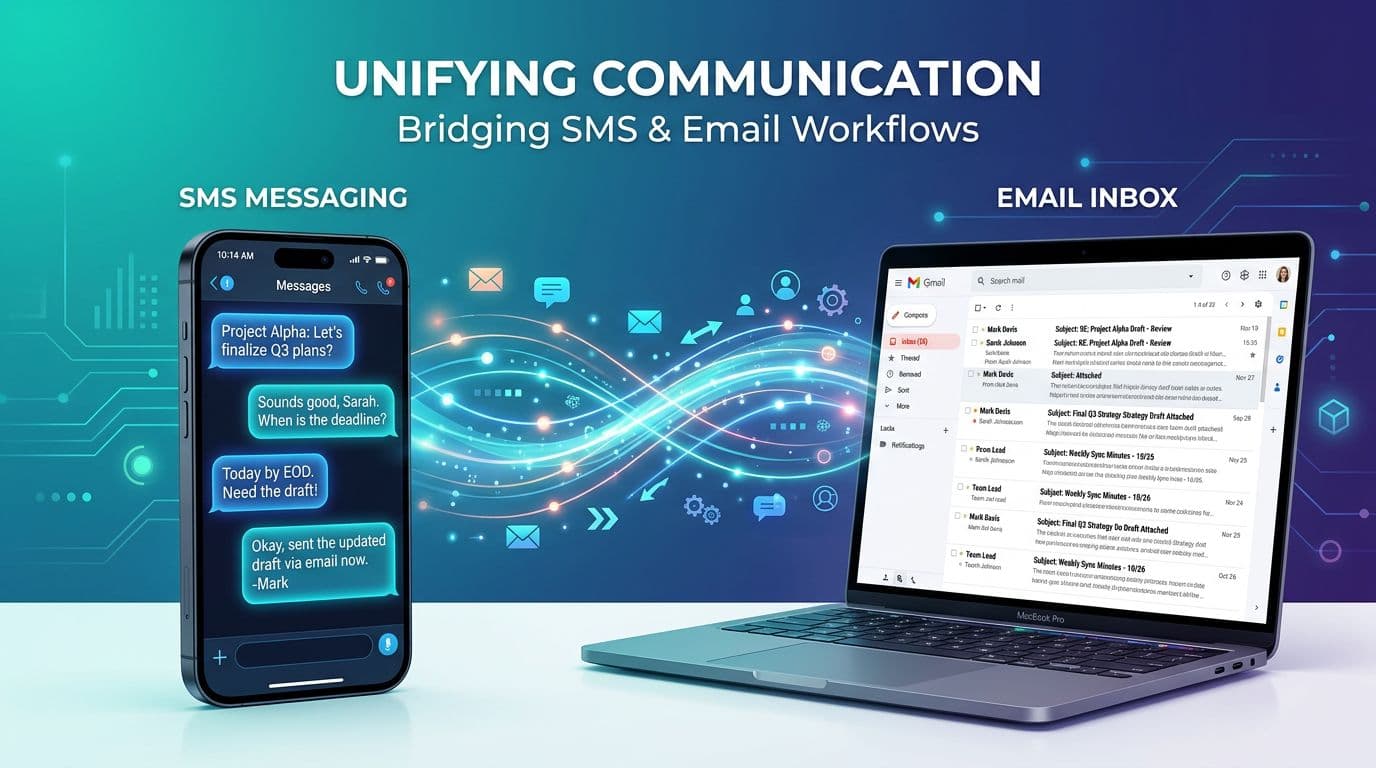
Sales teams have debated the merits of SMS versus email for years. But framing it as an either-or choice misses the point entirely. The data tells a clear story: each channel has distinct strengths, and the teams winning the most deals are the ones using both strategically.
This article breaks down the performance data for SMS and email in sales outreach, examines when each channel excels, and shows why an omnichannel approach consistently outperforms single-channel strategies.
The Numbers: SMS vs Email at a Glance
Before diving into strategy, let's look at the raw performance data that shapes the conversation.
Open Rates
SMS dominates open rates with a staggering 98% open rate, compared to email's 20-25% average open rate across industries. This gap exists because text messages arrive directly on a recipient's lock screen with an audible notification, while emails compete with dozens (or hundreds) of other messages in a crowded inbox.
For sales teams, this means SMS is nearly guaranteed to be seen. But "seen" and "acted upon" are two very different things.
Response Rates
SMS response rates average 45% across industries, while email response rates for cold outreach hover between 1-5%. Even well-crafted, highly personalized email sequences rarely exceed 8-12% response rates.
However, these numbers require context. SMS response rates include negative responses ("stop texting me"), while email non-responses are silent. The quality of engagement matters as much as the quantity.
Speed of Response
The average SMS response arrives within 90 seconds of delivery. Email responses, by contrast, take an average of 90 minutes for the first reply, and many arrive hours or days later.
For time-sensitive outreach -- event follow-ups, appointment confirmations, or limited-time offers -- SMS's speed advantage is decisive.
Click-Through Rates
When messages include links, SMS achieves click-through rates of 19-36%, while email CTRs average 2.5-3% across industries. Links in text messages feel more immediate and personal, driving higher engagement.
When SMS Wins: Speed, Urgency, and Personal Touch
SMS excels in specific scenarios where its strengths align with the sales objective.
Appointment Confirmations and Reminders
No-show rates drop by 26-38% when appointments are confirmed via SMS rather than email alone. A simple "Looking forward to our call tomorrow at 2pm -- reply YES to confirm" creates a micro-commitment that significantly improves attendance.
Immediate Follow-Ups
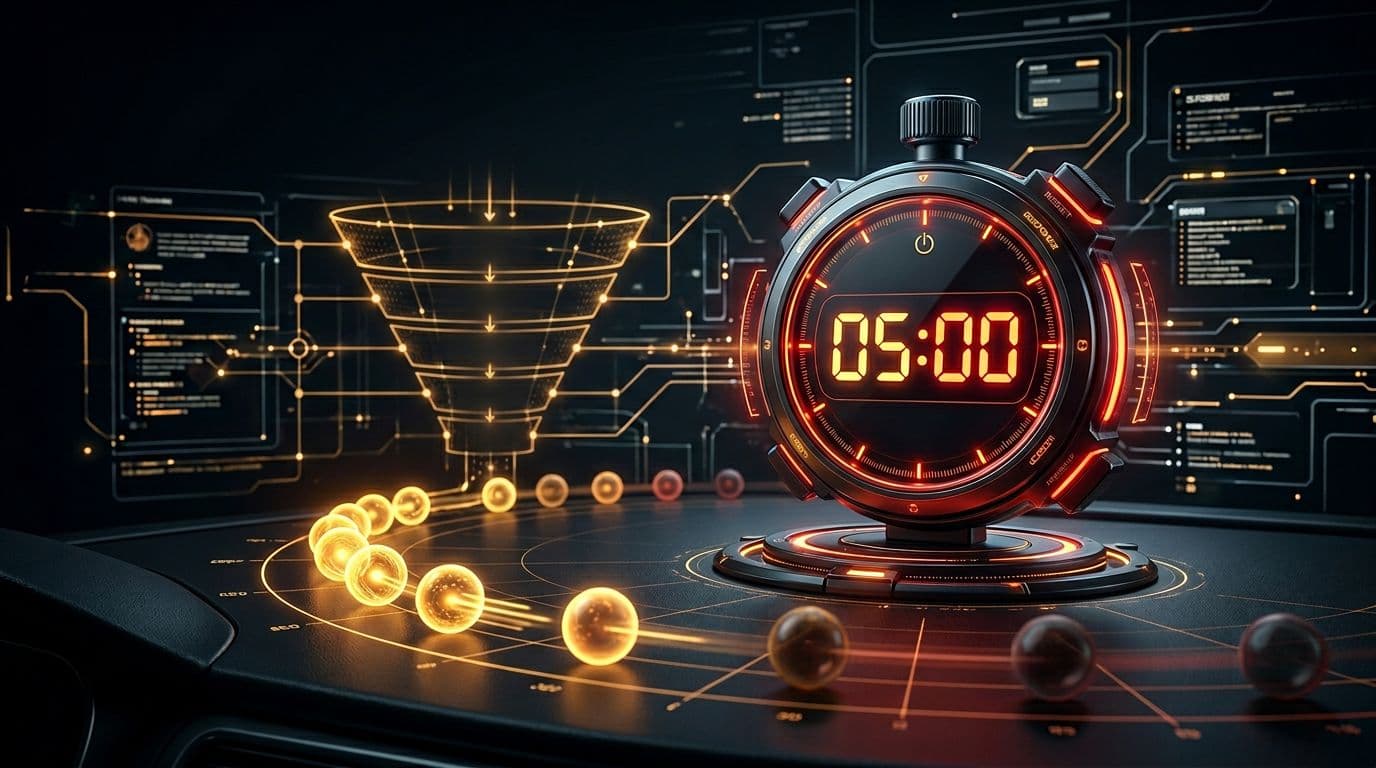
When a prospect fills out a form, attends a webinar, or visits a pricing page, responding within five minutes increases conversion by 21x compared to responding after 30 minutes. SMS is the fastest way to reach someone in that critical window.
Re-Engaging Cold Prospects
Prospects who have gone silent on email often respond to a well-timed text. A brief, conversational SMS like "Hey [Name], wanted to check if you had any questions about [topic from our last conversation]" feels less formal and easier to respond to than yet another email.
Short, Action-Oriented Messages
SMS works best when the message is concise and has a clear call to action. "Are you available Thursday at 3pm?" will outperform a long email outlining meeting logistics every time.
When Email Wins: Depth, Documentation, and Scale
Email holds advantages that SMS cannot replicate, particularly in B2B sales contexts.
Complex Value Propositions
When you need to explain a multi-faceted product, share case studies, or outline ROI calculations, email provides the space to make your case. A 300-word email with a linked case study communicates far more than a 160-character text.
Professional First Touches
For cold outreach to senior decision-makers, email remains the more professionally accepted channel. A well-researched cold email demonstrates effort and respect for the prospect's time in ways that an unsolicited text message cannot.
Document and Resource Sharing
Proposals, contracts, pricing sheets, and presentation decks belong in email. While you can share links via SMS, email provides the formatting, context, and professional framework that business documents require.
Scalable Sequences
Email enables sophisticated multi-touch sequences with personalization at scale. Variations in subject lines, body content, and send times can be tested and optimized across thousands of prospects simultaneously.
Legal and Compliance Documentation
Email creates a natural paper trail that both parties can reference. In regulated industries, having a documented communication history in email is often a compliance requirement.
The Omnichannel Advantage: Why Combining Channels 3x Response Rates
Here is where the data becomes compelling. Research consistently shows that multi-channel outreach sequences generate 3x higher response rates compared to single-channel approaches.
Why Multi-Channel Works
The psychology behind omnichannel effectiveness is straightforward:
-
Multiple touchpoints build familiarity. A prospect who receives an email, then a text, then another email perceives your brand as more established and persistent (in a good way) than one who receives three emails.
-
Different channels reach prospects in different contexts. Someone who ignores emails during a busy workday might respond to a text while waiting for coffee. A prospect who dismisses a text as spam might engage with a detailed email that demonstrates domain expertise.
-
Channel variety signals sophistication. Prospects subconsciously note when outreach comes through multiple channels. It suggests a well-organized sales operation, which builds confidence in the vendor.
-
It reduces the odds of being filtered out. Emails land in spam folders. Texts get lost in group chat notifications. Using both channels doubles your chances of actually reaching the prospect.
The Data Behind Omnichannel Sequences
Studies from multiple sales engagement platforms reveal consistent patterns:
- Email-only sequences: 5-8% average response rate
- SMS-only sequences: 12-18% average response rate (higher raw numbers, but often lower-quality responses)
- Combined email + SMS sequences: 22-28% average response rate
- Combined email + SMS + voice sequences: 28-35% average response rate
The lift from adding SMS to an email sequence is not additive -- it is multiplicative. Prospects who see your name in their inbox AND on their phone develop recognition faster, and recognition drives response.
Anatomy of a High-Converting Omnichannel Sequence
Understanding the theory is one thing. Here is what an effective omnichannel sequence looks like in practice.
Example: Post-Event Lead Follow-Up
Day 0 (Event day, within 1 hour of interaction): SMS: "Hey [Name], great chatting at [Event] today. I'll send over that info on [topic discussed] shortly."
Day 0 (2 hours later): Email: Detailed follow-up with relevant case study, key points from conversation, and a clear next step.
Day 2: Email: Value-add content related to the prospect's stated challenge. No hard ask.
Day 4: SMS: "Hey [Name], did you get a chance to look at that [resource] I sent? Happy to walk through it if you have 15 minutes this week."
Day 7: Email: Social proof email with a relevant customer story and specific meeting time suggestions.
Day 10: SMS: "Hi [Name], I know things get busy. Would a quick 10-minute call on [specific day] work to discuss [specific pain point]?"
Day 14: Email: Final value-focused email with a low-friction CTA (reply with a thumbs up, click one link, etc.)
This sequence achieves three things: it maintains presence without being overbearing, it alternates between channels to maximize visibility, and it escalates from relationship-building to direct asks gradually.
Example: Cold Outbound B2B Sequence
Day 1: Email: Personalized cold email referencing the prospect's company, a specific challenge in their industry, and a concise value proposition.
Day 3: Email: Follow-up with a different angle -- perhaps a relevant data point or quick insight.
Day 5: SMS: "Hi [Name], I sent a couple emails about [specific topic]. Wanted to see if that's something on your radar. No pressure either way."
Day 8: Email: Case study or social proof from a similar company in their space.
Day 12: SMS: "[Name], last note from me -- would it make sense to connect for 10 minutes next week? If not, totally understand."
Notice how SMS enters the sequence only after email has established initial context. The texts are conversational and low-pressure, creating a contrast with the more structured emails. This combination consistently outperforms email-only sequences by 2.5-3x in booking rates.
Compliance: Navigating the Rules for Each Channel
Multi-channel outreach requires understanding the distinct regulatory frameworks governing SMS and email.
SMS Compliance (TCPA and 10DLC)
The Telephone Consumer Protection Act (TCPA) governs text message marketing in the United States, and violations carry penalties of $500-$1,500 per message.
Key requirements:
- Prior express written consent is required before sending marketing texts. This means the prospect must have actively opted in -- a form submission, a checkbox, or a verbal agreement that is documented.
- 10DLC registration is now mandatory for all business SMS sent through standard 10-digit phone numbers. Carriers (AT&T, T-Mobile, Verizon) require businesses to register their brand and messaging campaigns through The Campaign Registry (TCR).
- Opt-out compliance is non-negotiable. Every SMS must honor STOP requests immediately, and your system must process opt-outs automatically.
- Quiet hours should be observed. While not uniformly mandated at the federal level, many states restrict texting before 8am and after 9pm in the recipient's local time zone.
- Message frequency must match what the prospect consented to. If they signed up for "occasional updates," sending daily texts violates the spirit and potentially the letter of their consent.
Email Compliance (CAN-SPAM)
The CAN-SPAM Act governs commercial email in the US, with penalties of up to $51,744 per violation.
Key requirements:
- No false or misleading header information. Your "From" name and email must accurately identify you or your business.
- No deceptive subject lines. The subject must reflect the content of the message.
- Identify the message as an ad if it is promotional in nature.
- Include your physical mailing address in every commercial email.
- Provide a clear opt-out mechanism and honor unsubscribe requests within 10 business days.
- Monitor third-party senders. If someone sends email on your behalf, you are still legally responsible.
Note: Unlike TCPA, CAN-SPAM does not require prior consent for initial outreach emails. However, ignoring opt-out requests or using deceptive practices carries severe penalties.
International Considerations
If your outreach extends beyond the US:
- GDPR (EU/UK) requires explicit opt-in consent for both email and SMS marketing, with strict data handling requirements.
- CASL (Canada) requires express or implied consent for commercial electronic messages, including both email and SMS.
- ACMA (Australia) enforces the Spam Act and Do Not Call Register for both channels.
The safest approach: build consent collection into your lead capture process from the beginning, maintain clear records, and automate opt-out processing across all channels.
How AI Manages Multi-Channel Sequences Intelligently
Running omnichannel sequences manually is operationally complex. Sales reps juggling email and SMS across hundreds of prospects inevitably drop balls -- messages sent at wrong times, follow-ups forgotten, channel preferences ignored.
This is where AI-powered sequence management transforms the equation.
Intelligent Channel Selection
Modern AI systems analyze prospect behavior to determine the optimal channel for each touchpoint. If a prospect opens emails but never replies, the AI might escalate to SMS sooner. If a prospect responds to texts quickly, the system prioritizes that channel for time-sensitive messages.
This is not simple rule-based automation. AI models evaluate engagement patterns across the entire prospect database to identify channel preferences at the individual level.
Timing Optimization
AI analyzes historical response data to determine the optimal send time for each prospect -- not just "Tuesday mornings work best" as a blanket rule, but "this specific prospect tends to engage with messages between 7-8am and 4-5pm based on their previous interaction patterns."
For SMS, timing is particularly critical. A text at 7am might annoy someone, while the same message at 11am gets an immediate response. AI systems learn these patterns and adjust automatically.
Dynamic Sequence Adjustment
Static sequences follow a predetermined schedule regardless of prospect behavior. AI-managed sequences adapt in real time:
- If a prospect clicks a link in an email, the AI might accelerate the next touchpoint.
- If a prospect replies negatively to a text ("not interested right now"), the AI adjusts the sequence to a nurture cadence rather than continuing aggressive outreach.
- If a prospect's company announces a funding round or leadership change, the AI can trigger a relevant, timely message through the optimal channel.
Conversation Continuity Across Channels
One of the most powerful capabilities of AI-managed omnichannel outreach is maintaining conversation context across channels. When a prospect replies to an SMS, the AI knows what emails have been sent, what links were clicked, and what previous conversations occurred -- enabling genuinely contextual responses regardless of channel.
This eliminates the jarring experience prospects often have with multi-channel outreach: receiving a generic email follow-up that ignores a text conversation from the day before.
Response Handling at Scale
When multi-channel sequences generate 3x the responses, someone needs to handle those responses quickly and intelligently. AI agents can:
- Qualify inbound responses immediately, 24/7
- Answer common questions about pricing, features, or timing
- Book meetings directly into the sales team's calendar
- Escalate complex conversations to human reps with full context
- Handle responses across SMS and email with consistent messaging
Measuring Omnichannel Performance
To optimize your multi-channel strategy, track these metrics across channels:
Channel-Level Metrics
- Open rate by channel (email only; SMS is assumed near-100%)
- Response rate by channel
- Response time by channel
- Opt-out rate by channel
- Positive response rate by channel (exclude "stop" and negative responses)
Sequence-Level Metrics
- Overall sequence response rate (any channel)
- Meeting book rate per sequence
- Average touches before first response
- Channel that generated the first positive response
- Time from first touch to meeting booked
Prospect-Level Metrics
- Preferred response channel per prospect
- Optimal send time per prospect
- Engagement score across channels
These metrics reveal which channel combinations work best for different prospect segments, enabling continuous optimization of your sequences.
Getting Started: Practical Steps
If you are running email-only outreach today, here is how to add SMS effectively:
-
Audit your consent. Review your lead capture forms to ensure they include SMS consent language. You cannot text prospects who have not opted in.
-
Register for 10DLC. Start the brand and campaign registration process immediately -- it can take 2-4 weeks for approval.
-
Start with high-intent leads. Add SMS to sequences for prospects who have demonstrated interest (form fills, event attendees, website visitors) before expanding to colder lists.
-
Keep texts conversational. SMS is not a place for marketing copy. Write like a human sending a quick note, not a brand broadcasting a message.
-
Respect the channel. SMS is more personal than email. Use it sparingly -- 2-3 texts per sequence maximum. Overusing SMS will spike opt-out rates and damage your sender reputation.
-
Automate opt-out handling. This is not optional. Every STOP request must be processed immediately and synced across your entire system.
-
Measure and iterate. Track response rates by channel, test different sequence structures, and let the data guide your strategy.
The Bottom Line
The SMS versus email debate has a clear resolution: you need both. SMS delivers unmatched open rates, response speed, and engagement for short, action-oriented messages. Email provides the depth, professionalism, and scalability that complex B2B sales require.
Combined intelligently -- with proper timing, consent management, and AI-powered optimization -- these channels do not just add to each other. They multiply each other's effectiveness. The data consistently shows 3x response rate improvements from omnichannel sequences compared to single-channel approaches.
The question is not whether to use SMS or email. It is whether you can afford to leave 3x response rates on the table by limiting yourself to just one.
Written by
Rocket Agents Team
Part of the Rocket Agents team, helping businesses convert more leads into meetings with AI-powered sales automation.
Ready to Convert More Leads?
See how Rocket Agents can help you respond to leads instantly and book more meetings.