Back to News
The 5-Minute Rule: Why Lead Response Time Is Killing Your Sales Pipeline
Rocket Agents Team
April 8, 2026
#lead-response#sales-pipeline#speed-to-lead#ai-agents#conversion-rates

Every sales leader knows the feeling. A hot lead fills out a form on your website at 9:47 AM. Your rep gets the notification at 10:15 AM, finishes their current call at 10:32 AM, and finally dials the prospect at 10:41 AM — nearly an hour later.
By then, the prospect has already filled out three competitors' forms, booked a demo with someone else, and mentally moved on.
This is not a hypothetical. This is what happens to millions of leads every single day, across every industry. And the data on just how much damage this delay causes is staggering.
The Study That Changed Everything
In 2007, Dr. James Oldroyd at MIT, in partnership with InsideSales.com, conducted what would become the most cited study in sales response time research. They analyzed over 15,000 leads across multiple industries and the findings were unambiguous:
Leads contacted within 5 minutes of submitting a web inquiry were 100x more likely to be reached and 21x more likely to enter the sales pipeline compared to leads contacted after 30 minutes.
Let that sink in. Not 2x more likely. Not 5x more likely. One hundred times more likely to connect, and twenty-one times more likely to qualify.
The study also found that the odds of making successful contact with a lead drop by over 10x in the first hour alone. After 5 minutes, every additional minute of delay compounds the damage exponentially.
These numbers were shocking in 2007. Nearly two decades later, buyer expectations have only gotten more demanding. Today's prospects expect instant responses — they've been trained by Amazon, Uber, and every other on-demand service to expect immediate gratification. A 30-minute response time that might have been acceptable in 2010 now feels like being ignored.
The Exponential Decay of Lead Value
To understand why speed matters so much, you need to understand what happens in the prospect's mind during those first few minutes after they express interest.
When someone fills out a form, requests a demo, or responds to an outreach message, they are at their peak moment of intent. They have a problem on their mind right now. They are actively thinking about solving it right now. They are emotionally engaged with the possibility of a solution right now.
Here is how lead conversion probability decays over time, based on aggregated data from multiple studies including the MIT research, Harvard Business Review analysis, and Drift's State of Conversational Marketing reports:
- Within 1 minute: Conversion rate baseline — highest probability of engagement
- At 5 minutes: Conversion probability drops by approximately 8x
- At 10 minutes: Conversion probability drops by approximately 20x
- At 30 minutes: Conversion probability drops by approximately 100x
- At 1 hour: Lead is effectively cold — you are now doing cold outreach to someone who was once warm
The curve is not linear. It is not even a gentle slope. It is a cliff. The difference between responding in 2 minutes and responding in 20 minutes is not a 10x difference in effort — it is a 10x difference in outcome.
A study published by the Harvard Business Review reinforced these findings with an even broader dataset. Researchers audited 2,241 companies and found that the average lead response time was 42 hours. Only 37% of companies responded within the first hour. Just 7.4% responded within 5 minutes.
Think about what that means: 92.6% of companies are losing the vast majority of their inbound leads to response time alone, not because their product is wrong, their pricing is off, or their marketing is weak — simply because they are too slow to respond.
Why Human Sales Teams Cannot Solve This Problem
If fast response time is so obviously important — and the data has been publicly available for nearly 20 years — why do most companies still fail at it?
The answer is structural. Human sales teams face fundamental constraints that make consistent sub-5-minute response times nearly impossible at scale.
1. Humans Have Working Hours
Your sales reps work 8-10 hours a day, five days a week. But leads do not submit forms on your schedule. Data from multiple lead generation platforms shows that up to 40% of web form submissions happen outside of standard business hours — evenings, weekends, and holidays.
A lead that comes in at 11:30 PM on a Friday will not be touched until Monday morning at the earliest. That is a 58-hour response time. By Monday, that lead might as well be a name in a phone book.
2. Reps Are Already Busy
Even during business hours, your reps are on calls, in meetings, doing research, updating CRM records, eating lunch, or handling the 47 other tasks that fill a sales professional's day. The notification pings, they see it, they make a mental note — and by the time they get to it, 30 minutes have passed.
The math is simple: if each rep handles 50-100 leads per month and each follow-up sequence involves 3-5 touchpoints, they are already managing 150-500 active tasks. Adding "respond to every inbound lead within 5 minutes" to that workload is asking for superhuman performance.
3. The Consistency Problem
Even if a rep manages to respond quickly some of the time, consistency is the real challenge. You do not need fast response times 60% of the time. You need them 100% of the time. Every lead that falls through the cracks due to slow response is revenue lost forever.
One study from Velocify found that sales reps who made their first call within a minute had a 391% higher conversion rate than those who waited even a day. But no human being can maintain one-minute response times across every lead, every day, without burning out or dropping other responsibilities.
4. The Volume Problem
For companies generating 10-20 leads per day, manual speed-to-lead might be manageable with enough discipline and dedicated SDRs. But what about companies generating 50, 100, or 500 leads per day? The economics of hiring enough humans to guarantee sub-5-minute response at that volume are prohibitive.
At 200 leads per day spread across 16 waking hours, that is roughly 12-13 leads per hour, or one every 4-5 minutes. To guarantee each gets a response within 5 minutes, you would need a dedicated team doing nothing but responding to inbound leads — not qualifying them, not nurturing them, just responding. And you would need enough people to cover breaks, meetings, and sick days.
The AI Response Time Advantage
This is where the math changes fundamentally.
An AI sales agent does not have working hours. It does not take lunch breaks. It does not get sick. It does not have 47 other tasks competing for its attention. It does not need to finish its current call before reading a new notification.
When a lead fills out a form at 2:17 AM on Christmas morning, the AI responds in seconds. Not minutes. Not hours. Seconds.
When 15 leads come in simultaneously during a webinar follow-up campaign, the AI handles all 15 in parallel, each getting a personalized response within moments. A human team would create a queue and work through it over the next hour.
The response time advantage is not incremental. It is categorical:
| Metric | Human Sales Team | AI Sales Agent | |---|---|---| | Average response time | 42 hours | Under 60 seconds | | Response at 2 AM | Next business day | Instant | | Response on weekends | Monday morning | Instant | | Response during holidays | After the holiday | Instant | | Simultaneous lead handling | 1 at a time per rep | Unlimited parallel | | Consistency | Varies by day and rep | 100% every time |
This is not about AI being "better" than humans at sales. It is about AI being better than humans at one specific, critical task: being there the moment a lead raises their hand.
Real-World Scenarios: The Leads You Are Losing Right Now
Let us walk through scenarios that happen in every sales organization, every single week.
Scenario 1: The Late-Night Researcher
It is 11:45 PM on a Tuesday. A VP of Operations at a mid-market company is lying in bed, scrolling through solutions to a workflow problem that frustrated her all day. She finds your website, reads a case study, and fills out a "Request Demo" form.
Without AI: Your CRM logs the lead. An email notification goes to your SDR team. Nobody sees it until 8:30 AM. The SDR starts their day with a team standup, checks email at 9:15, and calls the VP at 9:32 AM — nearly 10 hours later. The VP is now in back-to-back meetings and does not answer. The SDR tries again at 2 PM. By now, the VP has forgotten the urgency she felt last night and asks to "circle back next quarter."
With AI: The AI responds via email within 30 seconds. It references the case study the VP was reading, acknowledges her interest, and offers three time slots for a demo the next day. The VP, still awake and still engaged, replies and books a 10 AM slot. By the time the human team arrives in the morning, a qualified meeting is already on the calendar.
Scenario 2: The Weekend Conference Attendee
A prospect meets your team at an industry conference on Saturday. They are excited, exchange business cards, and your rep says they will "follow up Monday." The prospect goes home, and on Sunday afternoon, while the energy from the conference is still fresh, they visit your website and submit a contact form adding more details about their needs.
Without AI: The form sits in the queue for 18 hours until Monday morning. By then, the prospect has also followed up with three other vendors they met at the conference — vendors whose AI or offshore teams responded Sunday evening.
With AI: Within seconds of the Sunday submission, the AI sends a personalized message referencing the conference, thanks them for the additional details, and proposes a call for Monday afternoon. The prospect replies, impressed by the responsiveness, and your company is now first in line.
Scenario 3: The Holiday Lead Surge
Your marketing team runs a promotional campaign tied to a holiday. Leads surge on the holiday itself — when your entire office is closed. Over the three-day weekend, 87 leads come in.
Without AI: Your team returns Tuesday morning to a backlog of 87 leads, many now 48-72 hours old. They start working through them, but by lead number 40, the quality of their outreach has degraded. Many of these leads have already gone cold. Your effective conversion rate from the campaign drops to a fraction of what it could have been.
With AI: Every single one of those 87 leads received a personalized response within a minute of submitting their information. By Tuesday morning, 23 of them have already replied, 11 have booked meetings, and your human team can focus their energy on the highest-intent conversations rather than grinding through a stale backlog.
The Compounding Effect: Small Percentages, Massive Revenue
The real power of instant response becomes clear when you look at the compounding math across your entire pipeline.
Let us say your company generates 500 leads per month. With an average 42-hour response time, industry benchmarks suggest roughly 1-2% of those leads will eventually convert to customers. That is 5-10 new customers per month.
Now imagine you respond to every single one of those 500 leads within 60 seconds. Based on the MIT study data, your contact rate improves dramatically, and your pipeline entry rate could increase by as much as 21x for those leads you now successfully connect with.
Even conservatively, let us say instant response doubles your effective conversion rate from 2% to 4%. That is 10 additional customers per month — 120 per year. If your average deal size is $25,000, that is $3 million in additional annual revenue from changing absolutely nothing about your product, your pricing, or your marketing. You simply responded faster.
But the compounding goes deeper. Those 120 additional customers generate referrals. They write reviews. They expand their contracts. The downstream revenue impact of capturing leads that would have otherwise gone to competitors is enormous.
And consider the inverse: every lead you lose to slow response time goes to a competitor. You are not just failing to gain a customer — you are actively giving one to someone else. Speed-to-lead is a zero-sum game.
The Objection: "But AI Responses Feel Impersonal"
Some sales leaders resist AI-first response because they worry the communication will feel robotic or impersonal. This concern made sense five years ago, but modern AI agents have rendered it obsolete.
Today's AI sales agents can:
- Reference specific actions the lead took (which page they visited, which form they filled out, which ad they clicked)
- Personalize based on company and role data pulled from enrichment sources in real-time
- Adapt tone and messaging to match your brand voice exactly
- Handle objections and questions conversationally, not with canned responses
- Route to human reps seamlessly when the conversation reaches a point where human judgment adds value
The goal is not to replace human salespeople. The goal is to make sure a human salesperson gets the chance to have a conversation in the first place. If you respond 10 hours late, no amount of personal touch will recover the opportunity cost of that delay.
A fast AI response followed by a thoughtful human conversation beats a thoughtful human conversation that never happens because the lead went cold.
What Fast Response Looks Like in Practice
Implementing instant lead response is not about working harder. It is about building a system that works when you are not working.
The ideal speed-to-lead system:
- Detects the lead instantly — whether it comes from a web form, an ad platform, an event registration, or an email reply
- Enriches the lead in real-time — pulling company data, role information, and intent signals to personalize the response
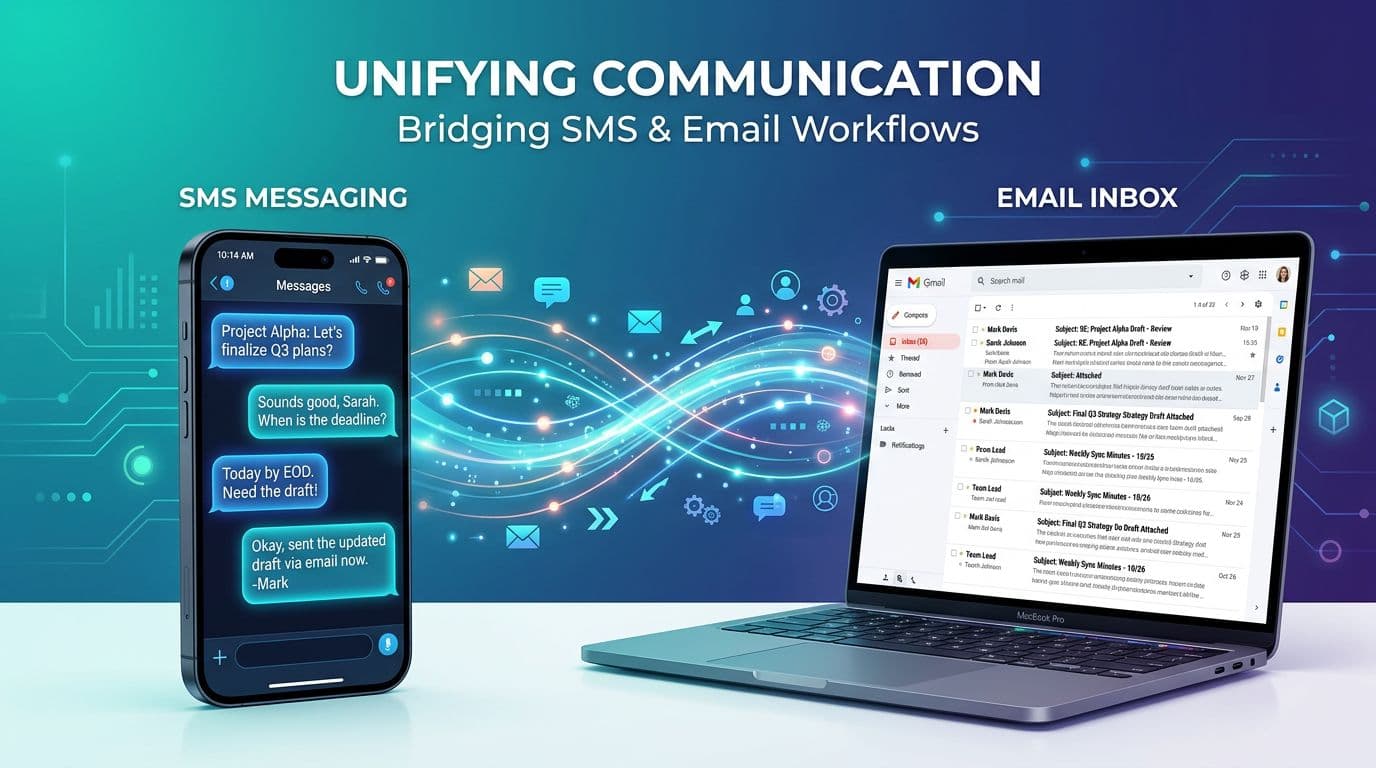
- Responds within seconds — via the channel the prospect used (email, SMS, or both), with a relevant, personalized message
- Qualifies through conversation — asking the right questions to determine fit, budget, and timeline
- Books meetings automatically — checking calendar availability and confirming a time, so your human reps start their day with a full calendar instead of a cold call list
This is not theoretical. This is exactly what AI sales agents do today, and the companies that have adopted them are seeing the results in their pipeline metrics.
The Bottom Line
The data is not ambiguous. Responding to a lead within 5 minutes versus 30 minutes is not a minor optimization — it is the difference between winning and losing the deal before a conversation even starts.
Human sales teams, no matter how talented or motivated, cannot consistently beat the clock at scale. The physics of human attention, working hours, and competing priorities make sub-5-minute response an aspiration rather than a guarantee.
AI sales agents make instant response the default, not the exception. They do not eliminate the need for skilled human salespeople — they ensure those salespeople spend their time on qualified conversations rather than chasing leads that went cold hours ago.
The 5-minute window is not a guideline. It is a deadline. And every lead that crosses it without a response is revenue walking out the door.
The question is not whether you can afford to implement instant lead response. The question is how much longer you can afford not to.
Written by
Rocket Agents Team
Part of the Rocket Agents team, helping businesses convert more leads into meetings with AI-powered sales automation.
Ready to Convert More Leads?
See how Rocket Agents can help you respond to leads instantly and book more meetings.