
Back to News
The Death of Cold Calling: Why AI-Powered Outreach Is the Future of B2B Sales
Rocket Agents Team
April 10, 2026
#ai-sales#cold-calling#b2b-sales#sales-automation#outreach
Cold calling is dying. Not slowly, not gracefully — it's collapsing under the weight of its own inefficiency while a new paradigm takes its place. If you're still building your B2B sales strategy around teams of SDRs hammering phones eight hours a day, you're not just behind the curve. You're burning money.
This isn't a hot take. It's what the data has been screaming for years. And with AI-powered outreach finally reaching maturity, the gap between companies that adapt and those that don't is about to become a chasm.
The Numbers Don't Lie: Cold Calling Is Broken
Let's start with the uncomfortable truth. According to research from Gartner, only 2% of cold calls result in a meeting. That means for every 100 dials, a rep gets 2 conversations that might — might — lead somewhere. Factor in the 8 to 12 dials it typically takes just to reach a live person (per RAIN Group's research), and you're looking at roughly 400-600 dial attempts to book a single meeting.
The economics are brutal. The average SDR costs a company between $75,000 and $120,000 per year in total compensation (base salary, benefits, tools, management overhead). A productive SDR makes 50-80 calls per day. At a 2% connection-to-meeting rate and typical connect rates, that SDR is booking maybe 8-15 meetings per month. Your cost per meeting? Somewhere between $500 and $1,200. And that's before you factor in ramp time — most SDRs take 3-4 months to hit quota, during which they're producing at 40-60% capacity while costing 100% of their compensation.
But the problem goes deeper than economics. Buyer behavior has fundamentally shifted. A study from TrustRadius found that 87% of B2B buyers want to self-serve part or all of their buying journey. Forrester reported that 68% of buyers prefer not to interact with a sales rep at all during the research phase. These buyers aren't sitting by their phones waiting for your cold call — they're actively avoiding it.
The average professional receives 4-6 cold calls per day. Their response? They stop answering unknown numbers entirely. Hiya's Robocall Report showed that 94% of unidentified calls go unanswered. Your SDRs aren't just fighting low conversion rates — they're fighting a behavioral shift where the phone itself has become a channel people actively distrust.
Why Previous "Solutions" Failed
The sales industry has tried to patch cold calling for decades. Predictive dialers, parallel dialers, intent data, better scripts — each innovation squeezed out marginal gains while the fundamental problem remained: you're interrupting someone who didn't ask to hear from you, at a time they didn't choose, with a message that's generically relevant at best.
Even "warm calling" — calling prospects who've shown some digital intent signal — only bumps conversion rates to 5-8%. Better, but still wildly inefficient compared to what's now possible.
The real issue is that cold calling treats every prospect interaction as a single, high-stakes moment. You get one shot. The prospect answers or they don't. They're in a good mood or they aren't. Your pitch lands or it falls flat. There's no iteration, no adaptation, no learning from what almost worked.
This is the structural weakness that AI-powered outreach exploits.
How AI Outreach Is Fundamentally Different
AI-powered outreach isn't just cold calling with a robot voice. It's a completely different architecture for prospect engagement. Understanding this distinction is critical, because most people hear "AI sales" and think of those awful robocalls from 2019. What's happening now is something else entirely.
Persistent, Multi-Touch Engagement
Traditional outreach is episodic: a call, an email, maybe a LinkedIn message. Each touchpoint is isolated. AI outreach is persistent — it maintains a continuous, adaptive conversation across channels and time.
When an AI agent reaches out to a prospect, it doesn't fire off a single email and move on. It orchestrates a sequence across email, SMS, and voice that adapts based on how the prospect responds (or doesn't respond). If an email gets opened but not replied to, the AI adjusts its next message. If a prospect replies with an objection, the AI addresses it immediately — not when a human rep gets around to checking their inbox.
This persistence is impossible for human SDRs at scale. A rep managing 200+ prospects can't maintain contextual, personalized conversations with each one. They rely on templated sequences that feel robotic precisely because they are robotic — just operated by a human.
Real-Time Objection Handling
Here's where AI outreach separates itself most dramatically. When a prospect replies to an AI-sent email with "not interested" or "we already have a solution," most traditional sequences either stop or send a generic follow-up. An AI agent treats every objection as a conversation.
Consider this real interaction pattern:
Prospect: "We're already working with another vendor for this."
AI Agent: "That makes sense — most companies in [their industry] have something in place. Out of curiosity, are they handling [specific pain point relevant to their company]? That's the gap we've been solving for companies like [similar company in their space]."
This isn't a canned response. The AI has researched the prospect's company, identified likely pain points based on their industry and size, and crafted a response that acknowledges the objection while reframing the conversation. It does this in seconds, at 2 AM on a Sunday if that's when the prospect happens to reply.
A human SDR might craft an equally good response — but only during business hours, only for the handful of objections they see that day, and only if they remember the context of this particular prospect's situation.
Timing That Humans Can't Match
One of the most underappreciated advantages of AI outreach is timing precision. Research from InsideSales.com (now XANT) found that the odds of qualifying a lead are 21x higher if you respond within 5 minutes versus 30 minutes. After an hour, the odds crater.
Human SDRs can't consistently respond in 5 minutes. They're in meetings, on other calls, at lunch, asleep. AI agents respond instantly, 24/7. When a prospect fills out a form at 11 PM, the AI is already engaging them before they close their laptop.
But it goes beyond speed of response. AI agents learn optimal outreach timing from patterns across thousands of interactions. They know that CFOs in manufacturing tend to engage with emails between 7-8 AM, that VP Sales at SaaS companies respond more on Tuesdays and Wednesdays, that certain industries go dark during specific seasonal periods. This isn't guesswork — it's statistical learning applied to millions of data points.
The Omnichannel Advantage: SMS + Email + Voice
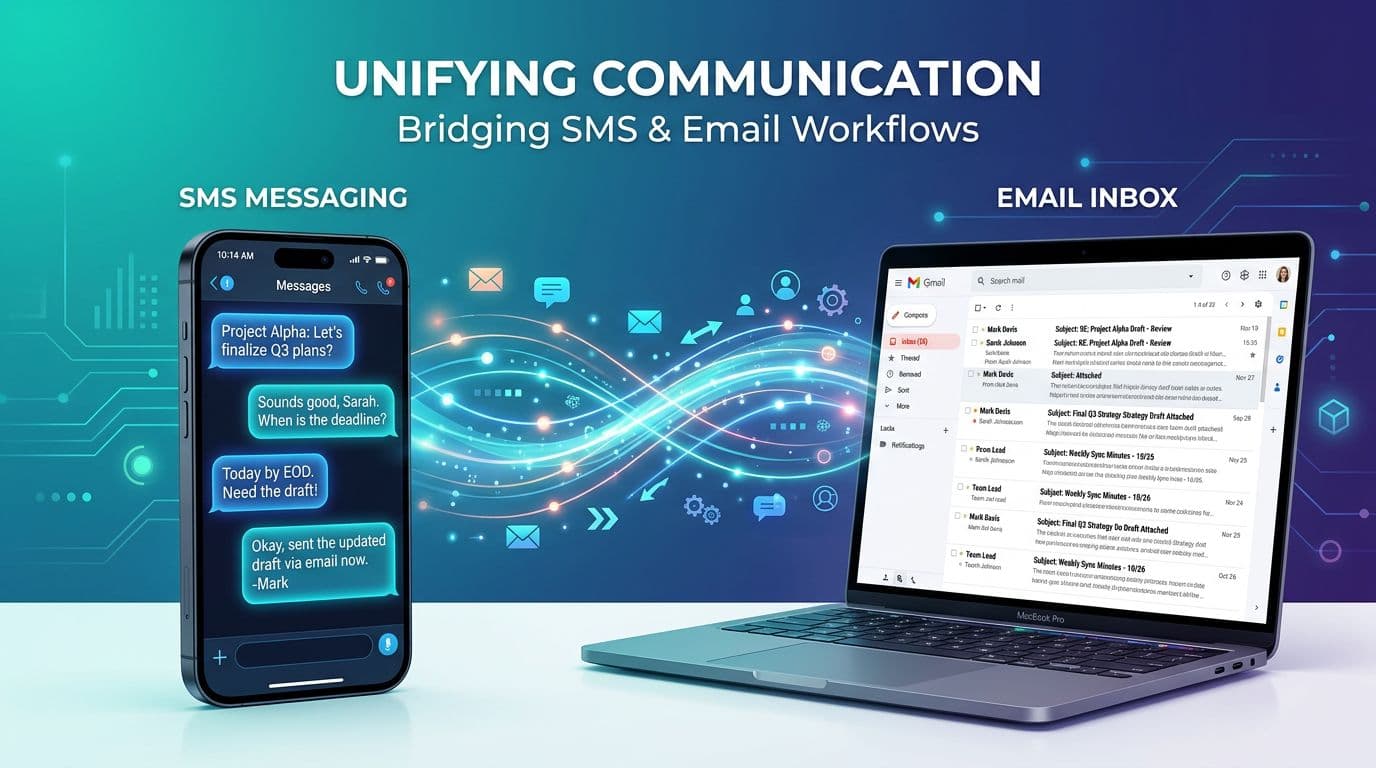
The most effective AI outreach systems don't rely on a single channel. They orchestrate across SMS, email, and voice — meeting prospects wherever they're most responsive.
Why Omnichannel Matters
Different prospects prefer different channels, and the same prospect prefers different channels at different times. A CEO might ignore emails during the workday but respond to a well-timed SMS. A VP of Operations might prefer email for initial contact but switch to phone for deeper conversations.
Single-channel outreach forces prospects into your preferred medium. Omnichannel outreach adapts to theirs. The data supports this dramatically: omnichannel outreach sequences see 3-5x higher response rates than single-channel sequences, according to research from Outreach.io.
SMS: The Underutilized Power Channel
SMS has a 98% open rate compared to email's 20-25%. Yet most B2B sales teams barely use it. Why? Because SMS at scale requires careful compliance management (TCPA, 10DLC registration, opt-out handling) and real-time conversational ability. A human can't manage hundreds of simultaneous SMS conversations.
AI can. And when SMS is woven into an outreach sequence — not as a blast, but as a contextual touchpoint — the results are striking. A well-timed SMS after an unopened email ("Hey [Name], shot you an email about [topic] — worth a look?") can double engagement rates.
Voice: AI That Actually Sounds Human
Modern AI voice agents have crossed the uncanny valley. They handle natural conversation flow, respond to interruptions, manage silence appropriately, and adapt their tone to the prospect's energy. They're not the stilted robocalls of five years ago.
More importantly, AI voice can handle the parts of calling that humans hate: the 50+ unanswered calls per day, the voicemail drops, the gatekeepers. When an AI agent does connect with a live prospect, it can qualify, handle objections, and book a meeting — then hand the relationship to a human closer for the high-value conversation.
The Orchestration Layer
The real magic isn't any single channel — it's the orchestration. An AI system might:
- Send a personalized email on Monday morning
- Follow up with an SMS Wednesday afternoon if no email response
- Make a voice call Friday morning if the SMS was read but not replied to
- Send a different email the following Tuesday, referencing the voicemail left on Friday
- Adjust the entire sequence if the prospect engages on any channel
Each touchpoint informs the next. The AI knows this prospect opened the email (interested but not compelled), read the SMS (aware and considering), and didn't pick up the call (busy, not hostile). It uses this behavioral data to craft the next message with surgical precision.
Personalization at Scale: The Impossible Made Routine
The personalization problem in traditional outreach is binary: you can personalize deeply for a few prospects, or you can reach many prospects with generic messaging. There's no middle ground because personalization takes time, and time is finite.
AI eliminates this tradeoff.
An AI agent can research a prospect — their company's recent news, their LinkedIn activity, their tech stack, their competitive landscape, their likely pain points based on role and industry — and synthesize that into a genuinely personalized message. Not "Hi {FirstName}, I saw you work at {Company}" personalization. Real personalization: "I noticed [Company] just expanded into the European market last quarter. Most companies at your stage hit a wall with localized compliance — curious if that's on your radar."
This level of research and synthesis takes a human SDR 15-30 minutes per prospect. An AI does it in seconds. At scale, this means every single prospect in your pipeline gets the kind of personalized attention that was previously reserved for enterprise whale accounts.
The Economics Are Undeniable
Let's compare the unit economics directly.
Traditional SDR Team (5 reps):
- Annual cost: $500,000 - $600,000 (comp, tools, management, overhead)
- Monthly meetings booked: 50-75
- Cost per meeting: $650 - $1,000
- Coverage: Business hours only, one timezone
- Ramp time: 3-4 months per new hire
AI-Powered Outreach:
- Annual cost: $50,000 - $150,000 (platform, credits, setup)
- Monthly meetings booked: 100-300+
- Cost per meeting: $15 - $125
- Coverage: 24/7, all timezones
- Ramp time: Days, not months
That's not a marginal improvement. It's an order-of-magnitude shift. And unlike human teams, AI outreach scales linearly — doubling your prospect volume doesn't require doubling your headcount.
The companies that understand this math are already moving. The ones that don't will wonder why their competitors seem to be everywhere at once while their SDR team struggles to hit quota.
What This Means for Sales Teams
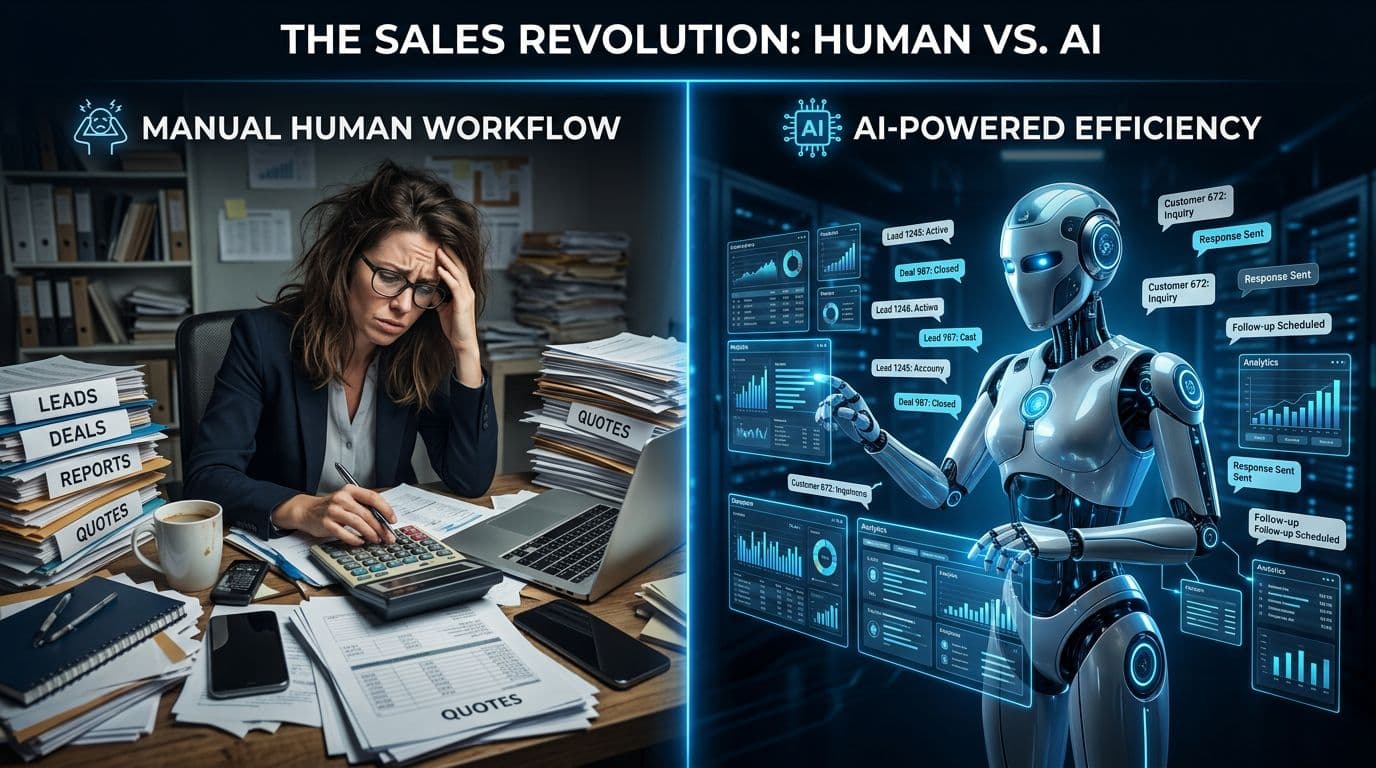
To be clear: AI-powered outreach doesn't eliminate the need for salespeople. It eliminates the need for salespeople to do the work they hate and are least efficient at — the grinding, repetitive top-of-funnel outreach that burns out SDRs and produces mediocre results.
The winning model is AI handling everything from initial outreach through qualification, then handing warm, qualified, interested prospects to human closers who do what humans do best: build relationships, navigate complex buying committees, negotiate deals, and provide the kind of strategic consultation that earns trust.
This is a better world for everyone. Salespeople focus on high-value conversations instead of dialing for dollars. Prospects get timely, relevant outreach instead of generic spam. Companies get more pipeline at lower cost.
The Transition Is Happening Now
If you're reading this and thinking "this sounds like the future," you're half right. It's the future for companies that haven't adopted it yet. For hundreds of B2B companies, it's the present.
The cold call isn't quite dead — there will always be contexts where picking up the phone and having a human conversation is the right move. But cold calling as a primary pipeline generation strategy? That era is over. The companies that recognize this and invest in AI-powered, omnichannel outreach will capture disproportionate market share. The ones that don't will be left wondering where all their prospects went.
They went to your competitors. The ones whose AI agent responded at 11 PM on a Tuesday while your SDR team was asleep.
Ready to see how AI-powered outreach can transform your sales pipeline? Get started with Rocket Agents and book more meetings with less effort — 24/7, across every channel.
Written by
Rocket Agents Team
Part of the Rocket Agents team, helping businesses convert more leads into meetings with AI-powered sales automation.
Ready to Convert More Leads?
See how Rocket Agents can help you respond to leads instantly and book more meetings.