
Back to News
Beyond Templates: How AI Sales Conversations Actually Work (And Why They Convert)
Rocket Agents Team
March 27, 2026
#ai-conversations#sales-ai#natural-language#objection-handling#conversational-ai
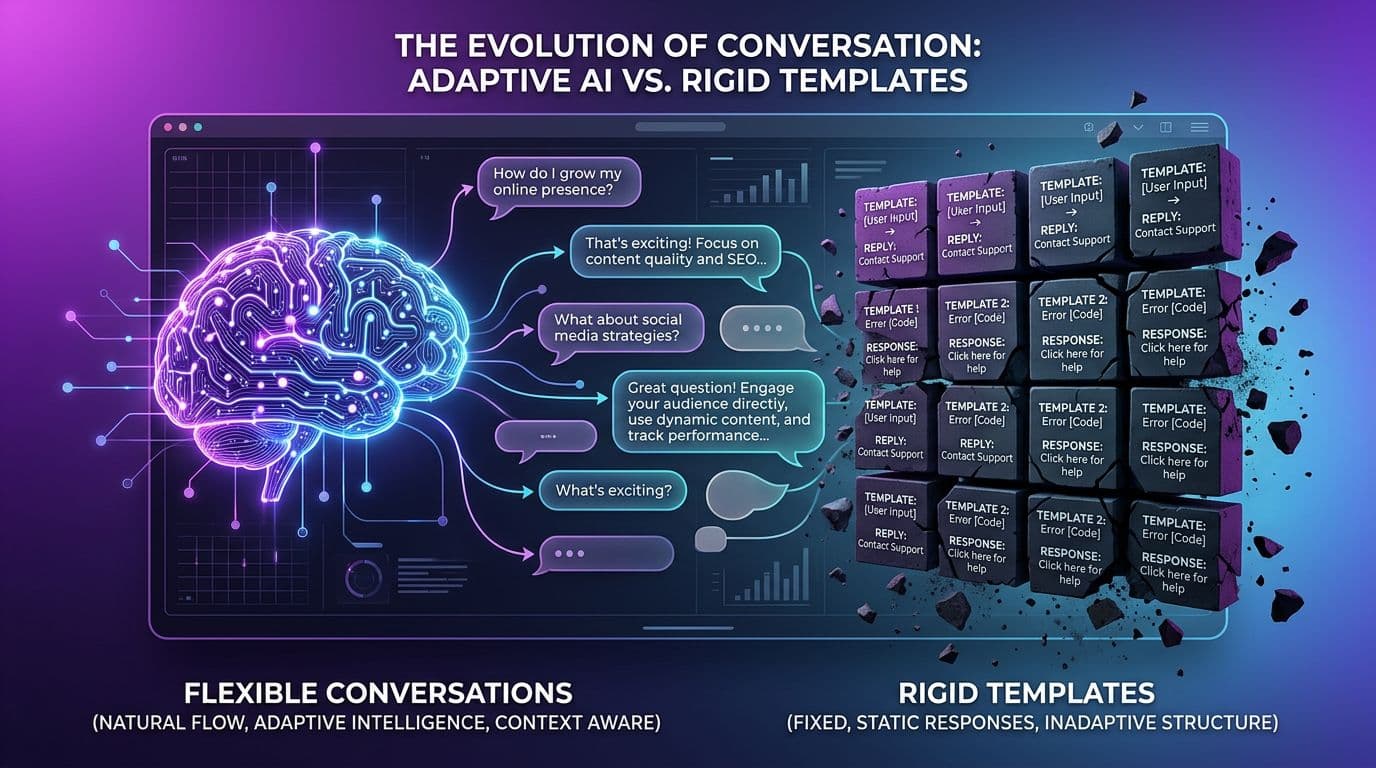
Every sales team has been there. You craft the perfect email sequence — a catchy subject line, a compelling value proposition, a clear call to action. You load it into your automation tool, hit send on 10,000 contacts, and wait.
The results trickle in. A 2% reply rate. Half of those are "please unsubscribe me." A handful ask questions your template never anticipated. And the leads who were interested? They got the same rigid follow-up as everyone else, regardless of what they actually said.
This is the fundamental failure of template-based sales outreach. And it is why AI-powered conversations are not just an incremental improvement — they represent an entirely different approach to how machines communicate with prospects.
Why Template-Based Sequences Are Broken
Template-based email and SMS sequences operate on a simple premise: write a message once, send it to many. The "personalization" amounts to mail-merge variables — {first_name}, {company}, maybe {industry}. The follow-up cadence is predetermined. Message three goes out on day five regardless of whether the prospect replied, what they said, or what is happening in their world.
This model has three critical flaws:
1. No Adaptation to Response Content
When a prospect replies "Sounds interesting, but we just signed a 2-year contract with your competitor," a template sequence has no idea what to do. The next message in the sequence fires anyway — maybe it is a case study about ROI, completely ignoring what the prospect just told you. This is not just ineffective; it is actively damaging to your brand.
2. One-Size-Fits-All Objection Handling
Every prospect has different concerns. A CFO worries about cost. A VP of Engineering worries about integration complexity. A Director of Operations worries about implementation timelines. Template sequences treat all of these people identically, because they cannot understand the difference between "too expensive" and "too complicated."
3. The Spam Problem
Recipients have developed finely tuned spam detectors — not just the algorithmic kind in their inbox, but the human kind in their brain. When a message reads like it was blasted to a thousand people, it triggers an immediate mental "delete." Even well-written templates suffer from a sameness that prospects can sense. The cadence is too regular. The tone is too polished. The follow-up is too indifferent to their actual response.
The industry's answer has been to add more personalization variables, more A/B testing, more sequence branching. But these are band-aids on a structural problem. The issue is not that templates lack personalization tokens — it is that they lack comprehension.
How AI Conversations Actually Differ
AI-powered sales conversations operate on fundamentally different principles than template sequences. Understanding these differences is key to understanding why they convert at dramatically higher rates.
Context Awareness
An AI sales agent does not just know a prospect's name and company. It processes the full context of the conversation — every message sent and received, the prospect's tone, their specific objections, their level of interest, and the time gaps between responses. When a prospect says "We looked at something similar last year but the timing was not right," the AI understands this is a warm signal with a timing objection, not a rejection.
This context awareness extends beyond the current conversation. The AI knows what the company does, what role the prospect holds, what pain points are common in their industry, and how those pain points connect to the product being offered. It uses this context to craft responses that feel like they are coming from a knowledgeable human who did their research.
Conversational Memory
Template sequences are stateless. Each message is written in isolation, with no awareness of what came before. AI conversations maintain full conversational memory. If a prospect mentioned in their first reply that they are "swamped with Q4 planning," the AI will reference that context naturally in follow-ups: "I know Q4 planning season is intense — would it make sense to reconnect in January when things settle down?"
This memory creates a sense of continuity that prospects recognize and appreciate. It signals that they are talking to something (or someone) that is actually paying attention, not just firing off the next pre-written message in a queue.
Dynamic Objection Handling
This is where the gap between templates and AI becomes a chasm. When a prospect raises an objection, the AI does not match it against a keyword list and return a canned response. It understands the nature of the objection, considers the prospect's context, and formulates a response that addresses their specific concern.
The difference is not subtle. Compare these two approaches to handling "we do not have budget for this":
Template response: "I understand budget can be a concern. Many of our customers found that the ROI paid for itself within 3 months. Can I send you a case study?"
AI response: "That makes sense — especially given you mentioned ramping up hiring for the new engineering team. A lot of companies in your position actually find that automating outbound lets them redirect that SDR budget toward the roles that are harder to fill. Would it be worth a 15-minute look at the numbers?"
The template response is generic and could apply to any prospect. The AI response connects the budget objection to something the prospect actually said, reframes the cost as a reallocation rather than a new expense, and ties it to their stated priorities.
Anatomy of an AI Sales Conversation
To understand how AI conversations actually work in practice, let us walk through the full lifecycle of a real conversation — from first touch to booked meeting.
Stage 1: Initial Outreach
The AI crafts an initial message based on the prospect's profile, their company, their role, and the product being offered. But unlike a template, the message is generated fresh for each prospect. The AI considers:
- What specific pain points does this person's role typically experience?
- What recent company news or events might create urgency?
- What tone and communication style is appropriate for this industry?
- What is the single most compelling reason this person should respond?
The result is a message that reads like it was written by a well-prepared sales rep who spent 10 minutes researching the prospect — because in a sense, it was.
Stage 2: Response Processing
When the prospect replies, the AI performs several layers of analysis before generating a response:
Intent Classification: Is this a positive response, a negative response, a question, an objection, a request for information, or an out-of-office auto-reply? Each requires a completely different approach.
Sentiment Analysis: Beyond the words themselves, what is the prospect's emotional tone? Are they annoyed? Curious? Skeptical but open? The AI adjusts its response style accordingly.
Information Extraction: What new facts did the prospect share? A mention of a competitor, a budget cycle, a team size, a timeline — all of these become context for the current and future messages.
Priority Assessment: How urgently should the AI respond? A warm "tell me more" gets a faster reply than a lukewarm "maybe send some info."
Stage 3: Objection Navigation
Most sales conversations involve at least one objection. The AI's approach to objections follows a sophisticated process:
- Acknowledge the objection directly — never ignore or dismiss what the prospect said
- Empathize with the underlying concern — show understanding of why this matters to them
- Reframe the objection using context from the conversation and the prospect's specific situation
- Advance the conversation toward the next logical step — never pushing too hard, never backing off too quickly
This is not a rigid four-step formula the AI follows mechanically. It is a set of principles the AI applies fluidly based on the specific situation. Sometimes the right response to an objection is a question. Sometimes it is a concession. Sometimes it is patience — acknowledging the objection and suggesting a future touchpoint.
Stage 4: Meeting Booking
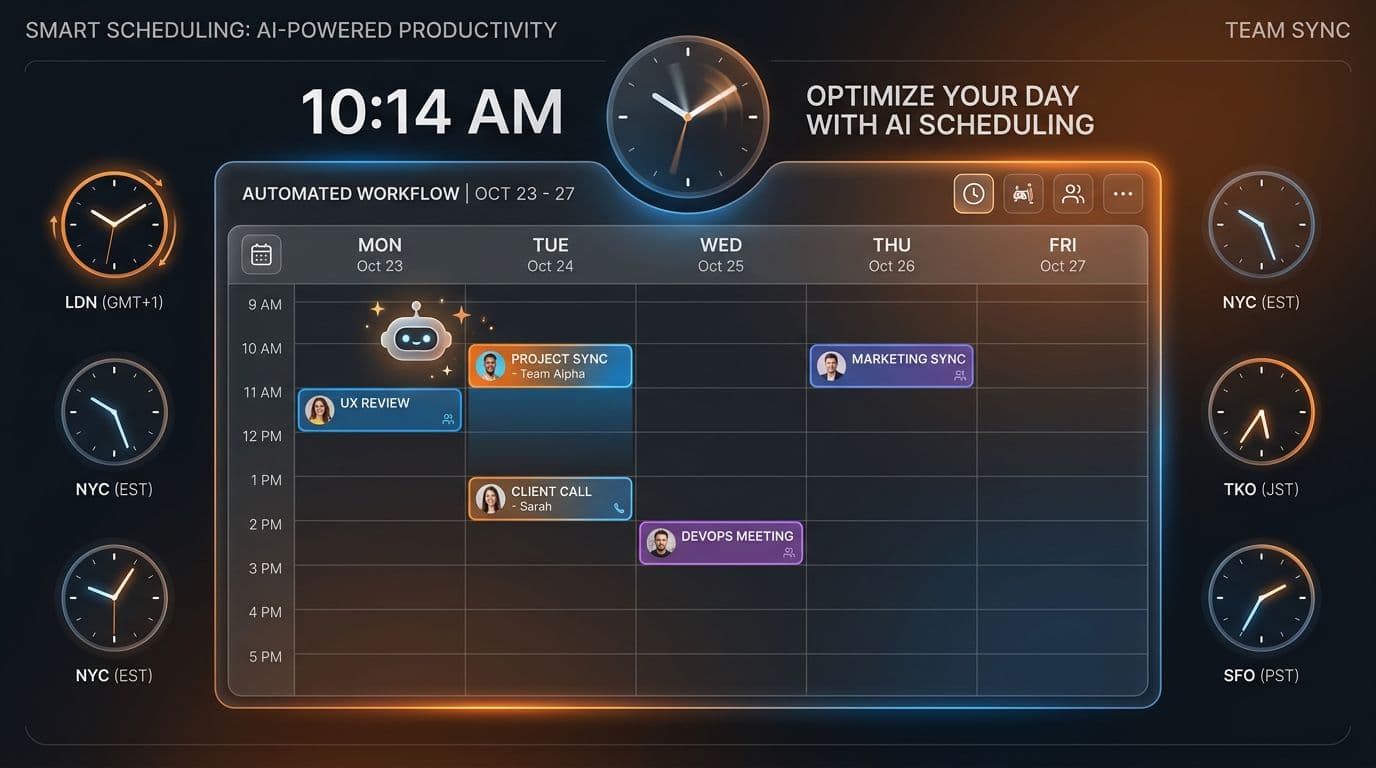
When the prospect signals readiness — whether explicitly ("Sure, let's talk") or implicitly ("What would a pilot look like?") — the AI shifts into scheduling mode. It proposes specific times, handles timezone logistics, sends calendar invitations, and confirms the booking. The transition from conversation to calendar is seamless, with no handoff friction or lost momentum.
Handling the Four Most Common Objections
Let us look at how AI handles the objections that every sales team encounters, and why its approach outperforms scripted responses.
"Not Interested"
The worst thing you can do with a "not interested" response is argue. Templates often make this mistake — sending a follow-up that essentially says "but you SHOULD be interested!" The AI takes a different approach. It acknowledges the response, does not push, but leaves the door open with a low-pressure touchpoint. Something like: "Totally fair — I appreciate you letting me know. If anything changes on your end, I am happy to chat. Have a great rest of the week." This response respects the prospect's time, avoids burning the bridge, and occasionally prompts a "well, actually..." reversal.
"Too Expensive"
Price objections are rarely about the absolute number. They are about perceived value relative to cost. The AI understands this and responds by connecting value to the prospect's specific situation rather than quoting generic ROI statistics. If the prospect mentioned they have a team of three SDRs, the AI might frame the cost comparison against SDR salaries. If they mentioned struggling with lead response times, it might frame the value in terms of speed-to-lead improvements.
"Bad Timing"
Timing objections are often the most valuable — they indicate interest combined with a constraint. The AI treats these as opportunities, not rejections. It asks about the specific timing constraint, proposes a concrete follow-up date, and actually follows through at the right time. This is where conversational memory becomes critical: when the AI reaches back out in six weeks, it references the original conversation and the specific reason the prospect wanted to wait.
"Send More Info"
This is the objection that kills the most deals when handled poorly. Templates respond by blasting a PDF attachment or a link dump. The AI responds by asking what specific information would be most useful — and then providing targeted, relevant content rather than a generic brochure. It might say: "Happy to send some details. Are you more curious about how the AI handles inbound responses, or more about the outbound campaign setup?" This keeps the conversation going rather than ending it with a one-way information dump.
Natural Language Understanding vs. Keyword Matching
Early chatbots and automation tools relied on keyword matching. If a message contained "price" or "cost," it triggered the pricing objection response. If it contained "not interested" or "no thanks," it triggered the opt-out flow. This approach fails spectacularly in real conversations.
Consider these three messages:
- "What is the price?"
- "We just won a pricing award for our own product."
- "You could not price me out of this if you tried — I am very interested."
Keyword matching treats all three as pricing objections. Natural language understanding correctly identifies the first as an information request, the second as irrelevant context, and the third as a strong positive signal.
Modern AI sales agents use transformer-based language models that understand meaning, context, sarcasm, implication, and nuance. They can distinguish between "Let me think about it" (a soft stall) and "Let me think about who else on my team should join the call" (a buying signal). They understand that "I will pass" means no, but "I will pass this along to my CTO" means the deal might be escalating.
This depth of understanding is what allows AI conversations to maintain coherence across multiple exchanges. The AI is not pattern-matching its way through a conversation tree — it is comprehending the conversation as a whole and generating contextually appropriate responses.
The Uncanny Valley Problem
There is a legitimate concern about AI-generated sales messages: the uncanny valley. Messages that are almost human but not quite can feel creepy, manipulative, or off-putting. Early AI outreach tools suffered from this — messages that were technically fluent but emotionally hollow, or that demonstrated knowledge in ways that felt invasive rather than helpful.
Modern AI sales agents avoid the uncanny valley through several mechanisms:
Calibrated formality. The AI matches the prospect's communication style. If they write in short, casual sentences, it responds in kind. If they write formally, it adjusts. This mirroring happens naturally because the AI processes the prospect's actual messages, not just metadata about them.
Appropriate imperfection. The best AI-generated messages include the kinds of small informalities that humans naturally use — contractions, sentence fragments, conversational transitions. A message that reads like a polished press release triggers suspicion. A message that reads like a quick note from a busy person does not.
Restraint in personalization. Knowing everything about a prospect and mentioning all of it is creepy. The AI selectively uses context, referencing one or two relevant details rather than demonstrating comprehensive surveillance of the prospect's LinkedIn activity.
Genuine responsiveness. The most important factor in avoiding the uncanny valley is actually responding to what the prospect says. Nothing feels more robotic than a reply that ignores the content of the previous message. By maintaining true conversational coherence, the AI passes the test that matters most — it feels like talking to someone who is actually listening.
Multi-Turn Conversation Management
Perhaps the most underappreciated capability of AI sales agents is their ability to manage conversations that span days, weeks, or even months. Real sales conversations are rarely resolved in a single exchange. A prospect might respond enthusiastically on Monday, go silent for two weeks, come back with a question, disappear again, and then suddenly ask for a demo.
AI agents handle this naturally because they maintain the full conversation history and understand the significance of time gaps. A two-day silence after an enthusiastic response might warrant a gentle check-in. A two-week silence after "let me think about it" might warrant a value-add follow-up with new relevant information. A month of silence after "bad timing" might warrant a fresh re-engagement that references the original conversation.
This long-horizon conversation management is nearly impossible with template sequences, which operate on fixed cadences regardless of conversation dynamics. And it is extremely difficult for human SDRs to manage at scale — keeping track of dozens of conversations at different stages, with different contexts, requiring different follow-up approaches and timings.
The AI handles all of this automatically. Every conversation is tracked, every context point is remembered, every follow-up is timed appropriately. The result is that no leads fall through the cracks, no conversations are abandoned prematurely, and every prospect receives follow-up that matches their specific situation and timeline.
The Conversion Difference
The combined effect of these capabilities — context awareness, conversational memory, dynamic objection handling, natural language understanding, uncanny valley avoidance, and multi-turn management — produces conversion rates that template-based sequences simply cannot match.
This is not because the AI is more persuasive in any individual message. It is because the AI maintains conversational coherence over time, responds appropriately to what prospects actually say, and never drops a thread. In sales, consistency and relevance compound. A conversation that stays coherent across eight exchanges builds trust in a way that eight disconnected template messages never can.
The future of sales outreach is not better templates. It is not more A/B testing or more personalization tokens. It is conversations that actually understand and respond to what prospects are saying — at scale, across channels, 24 hours a day.
That is not a template. That is an AI agent.
Written by
Rocket Agents Team
Part of the Rocket Agents team, helping businesses convert more leads into meetings with AI-powered sales automation.
Ready to Convert More Leads?
See how Rocket Agents can help you respond to leads instantly and book more meetings.